Varroa resistance 2033
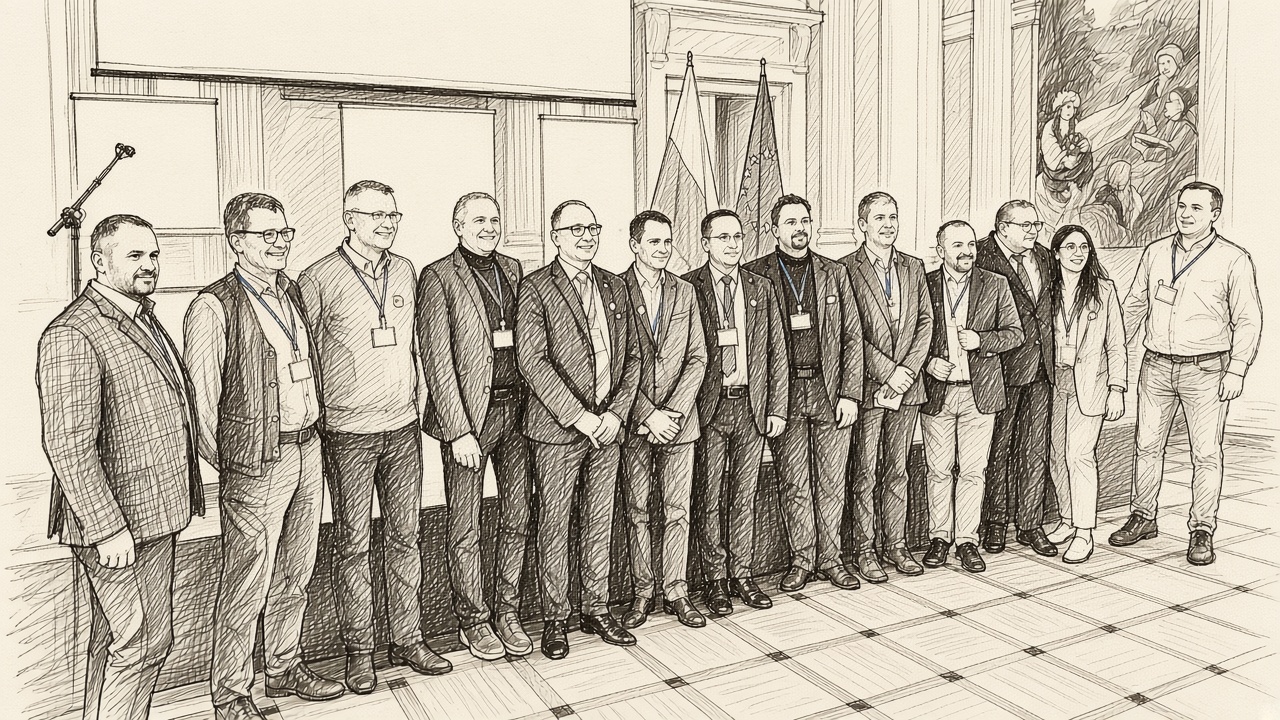
2033 is a horizon, not a mite-free hive. Eddy Nowicki speaks in that movement from Laakdal, as chairman of Bijenvrienden and APIF.
Varroa resistance 2033 is a European movement of beekeepers’ associations, researchers and practical people. On 19 May 2022 associations from Germany and Luxembourg agreed in Neuenstein to work for the next ten years towards a varroa-resistant honey-bee population. The project site names four pillars: resistance breeding, basic selection, biotechnical methods and training. The project does not breed bees itself. It connects those who do.
2033 is a horizon, not a date by which the mite must have disappeared from the hive. At the conference in Warsaw Mariusz Chachuła put it this way: the point is that the bees can live with the mite, not that there is no longer a mite in the colonies.
The place of Eddy Nowicki
Eddy Nowicki is chairman of Bijenvrienden Kempen and of the Antwerp Provincial Beekeepers’ Federation (APIF), the provincial association within KonVIB since 2021. He did not found this movement. The project site names the Neuenstein agreement and the participating associations, not him.
His share is the practice. On 18 and 19 April 2026 he spoke in Warsaw at the first Varroaresistenz Polska 2033 conference, before about three hundred participants. The subject was the value of biotechnical varroa control in Belgium. He spoke there as chairman of the Antwerp federation, from the work on the apiary in Laakdal.
Do not kill, let die
The line of that lecture is simple. The mite does not have to be killed with a product if she dies before she can go back into the brood. For that the brood pause has to be long enough, longer than fifteen to twenty days. Old mites on the bees then become more infectious with deformed-wing virus and no longer enter a new cycle.
Counting on workers gives a skewed picture, he says, because the mites sit mainly on the drones.
The figures from his apiary and the two autumn methods are on the page about the Chmary isolator. That text stays there. No new dosing schedule is added here.
The hybrid isolator
After the Chmary isolator he worked out a hybrid isolator. Bijenvrienden describe it as one system: queen isolation, a controlled brood break and a trap comb. The beekeeper chooses what the colony and the season ask. The explanation and the timetable are with the hybrid isolator.
They also mention a collaboration with professor Krzysztof Olszewski of the University of Lublin, in which practice at the hive is set beside the research.
Selection remains the other leg
Biotechnics keeps the pressure down while the line changes. Varroa-sensitive hygiene remains a selection criterion at Bijenpunt, beside gentleness, a slow swarming drive, a good winter and honey. A queen from the shop is therefore not a VR2033 bee, and not a colony you no longer have to follow.